Shaping product strategy through user research: Transaction Search at RBC
RBC Business Banking was scaling a new commercial banking platform while gradually onboarding legacy users. As more users migrated to the platform, feedback increased, particularly around transaction search, one of the most heavily used features in day-to-day banking workflows.
At the time, the platform offered two search touchpoints that addressed basic lookup needs, but it was becoming unclear whether they were enough. The product team had begun exploring the idea of a global, platform-wide search — but before committing to that investment, they needed to answer a more fundamental question.
TL; DR
role
UX Researcher Co-op
team
1 Sr. UX Researcher
1 Sr. Interaction Designer
time
May - August 2025
industry
Bank, Fintech, B2B
problem
Migration Brought It to the Surface
Business clients rely on transaction search daily. On the legacy platform, they'd built habits that worked. Then migration began, and those familiar patterns no longer applied — search was one of the first places friction showed up.
Where can I search multiple accounts for one report?
Where can I search for the report?
70% feedback was about "Report"
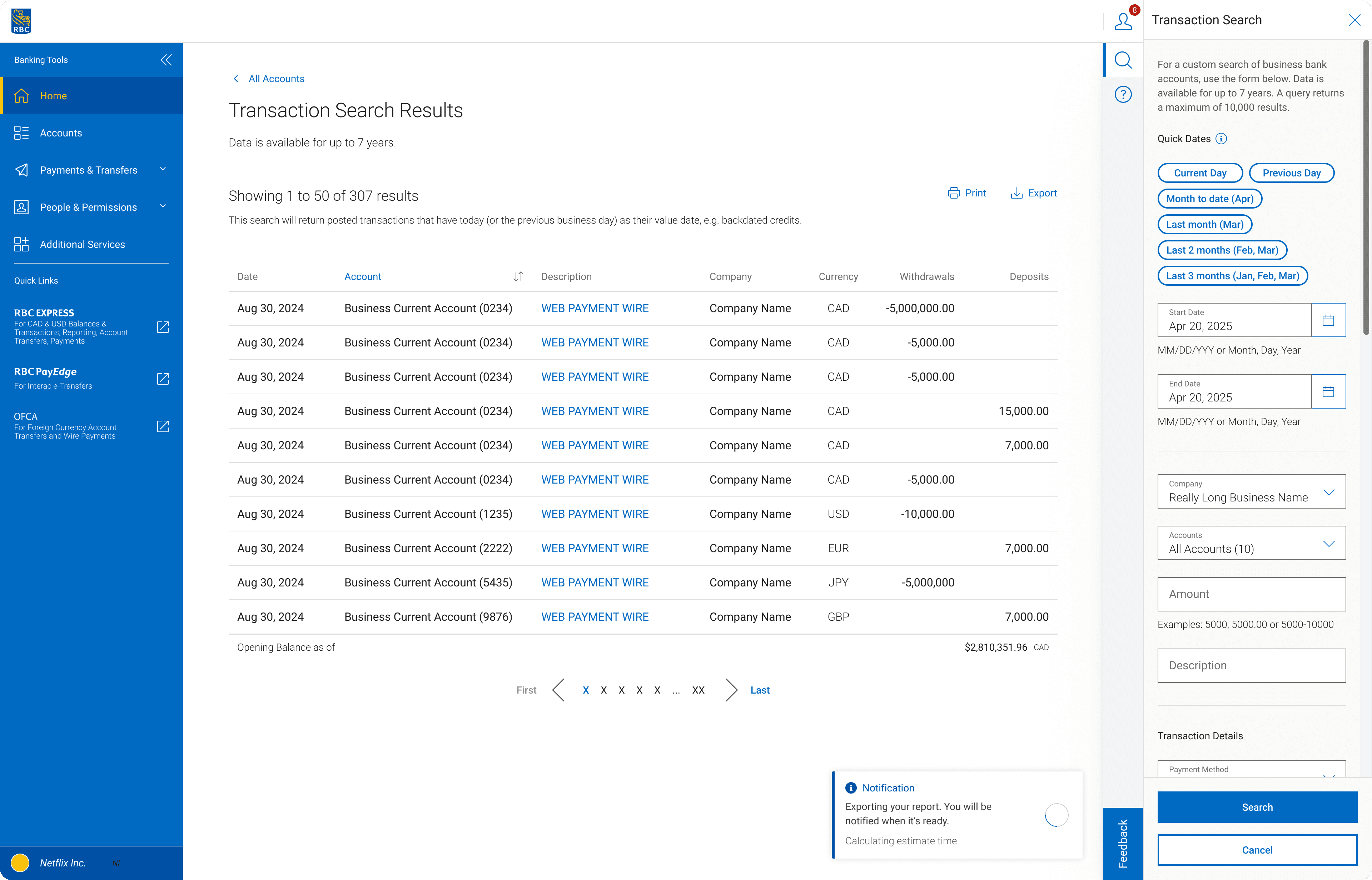
Touchpoint 1
Transaction search panel
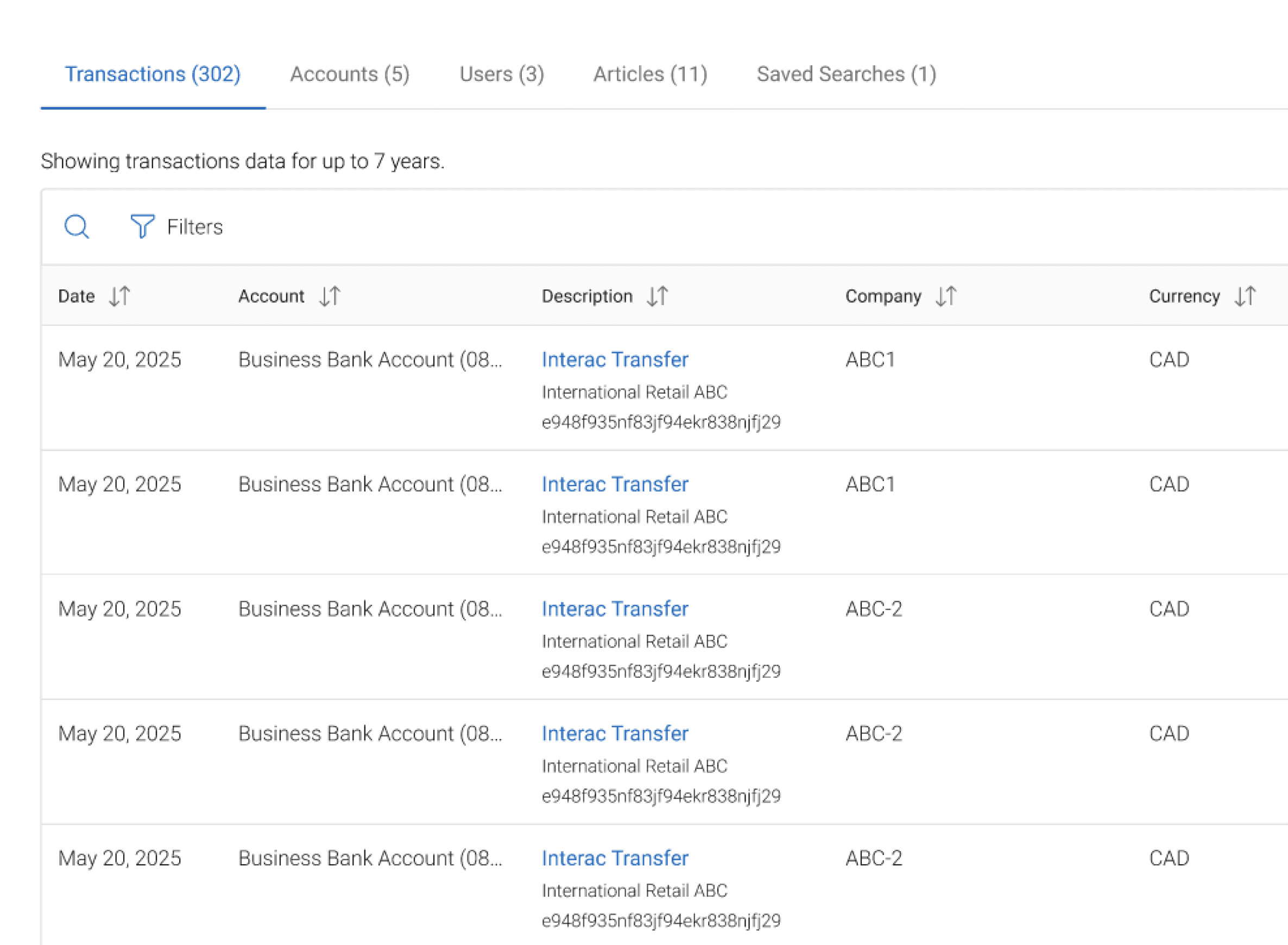
Touchpoint 2
Table-level keyword search
Reconciliation across accounts
Quick account lookups
Payment verification
Client usage
Work done with search
As more legacy users onboarded, the team began questioning whether the new platform's search tools were enough.
assumption
Starting with What We Believed
The team held an untested assumption: that users primarily needed to search transactions, and that existing tools were sufficient. It was a belief shaped by early conversations with clients, but it had never been formally investigated. With migration underway, acting on that assumption without evidence carried real risk — in engineering investment and client trust at exactly the moment when users were still forming their relationship with the new platform.
This left two open questions the team needed to resolve before making any roadmap decisions:
Question 1
Are search gaps a product of missing features, unclear mental models, or disrupted expectations from migration?
Question 2
Would investing in a unified, platform-wide search create meaningful value — or unnecessary complexity?
Our goal wasn't to validate what the team believed. It was to find out if it was actually true.
Goal 1
What are clients' current mental models for transaction search?
Goal 2
How do they search today, and where do they struggle?
Goal 3
Is a faceted, platform-wide search worth building — and why?
approach
Qualitative & Quantitative approach
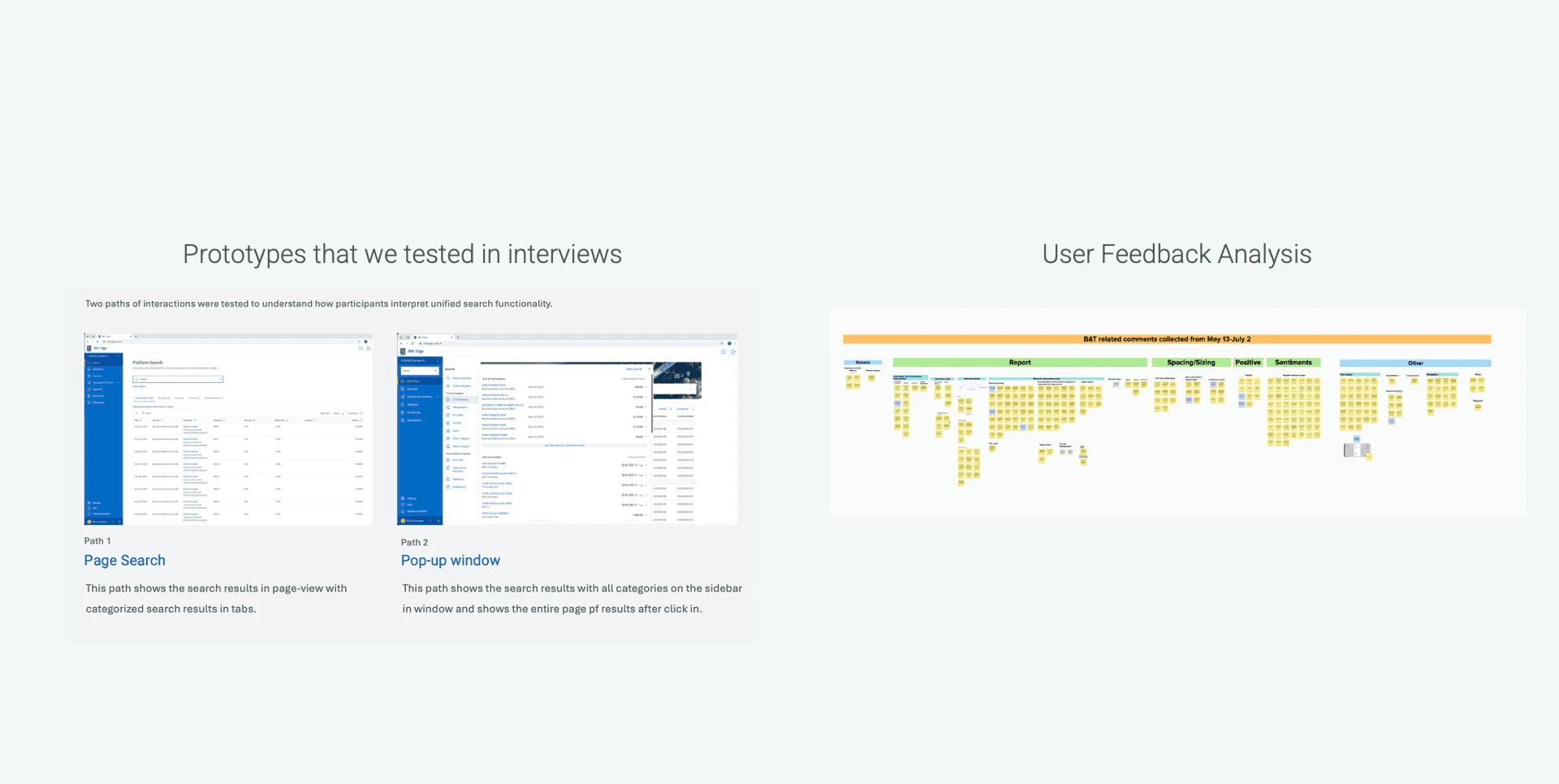
We talked with 5 clients to understand their mental models of search. We also tested two paths of interactions to understand how participants interpret unified search functionality.
5
business clients (4 legacy users, 1 new platform user)
2
prototypes tested
250+
feedback entries anaylzed
concept testing
Compare two paths of global search
To explore whether unified search could meaningfully improve the experience, the team developed two high-fidelity prototype paths — each taking a different approach to how search is surfaced and navigated.
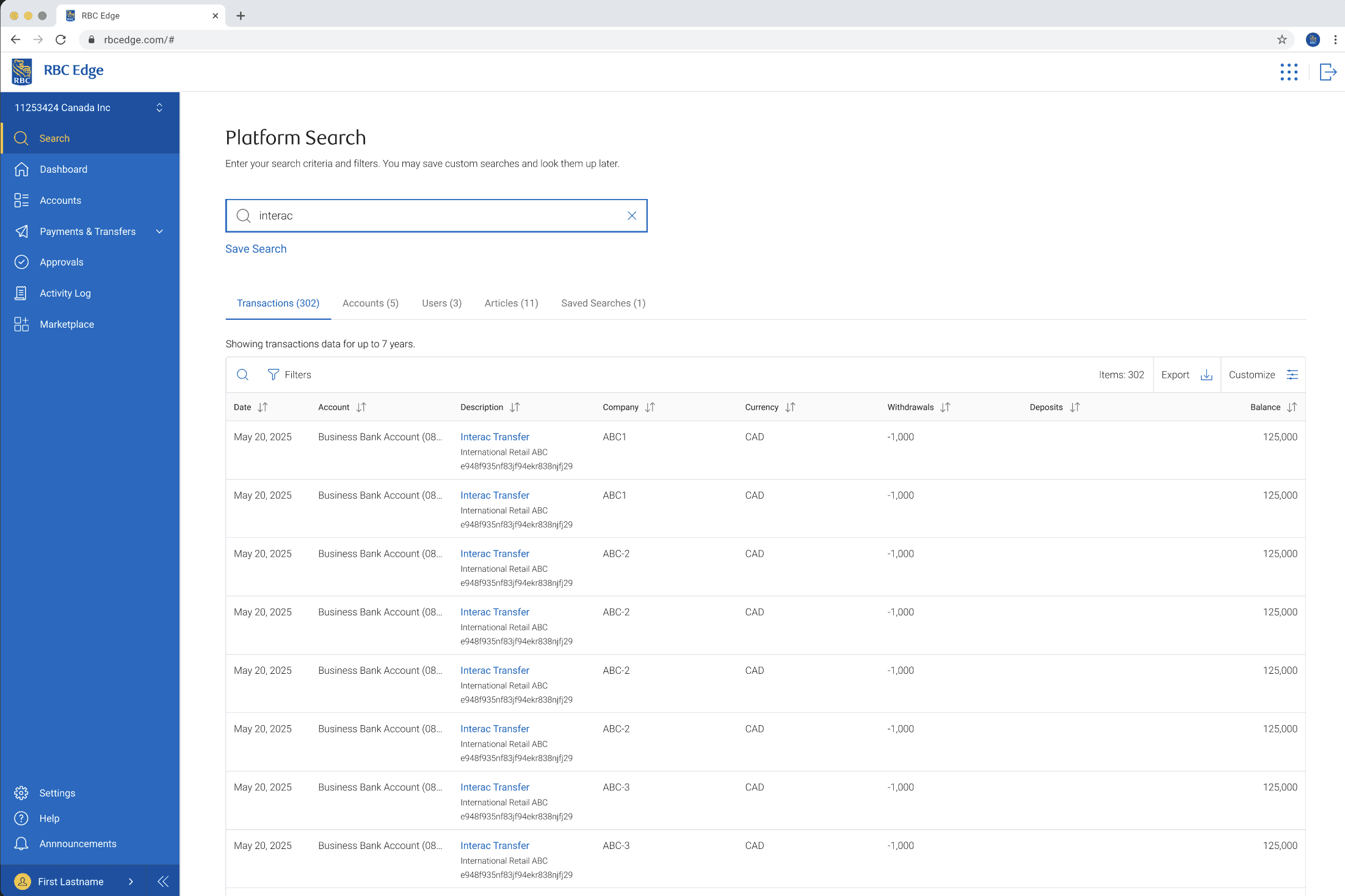
Path A
Page Search
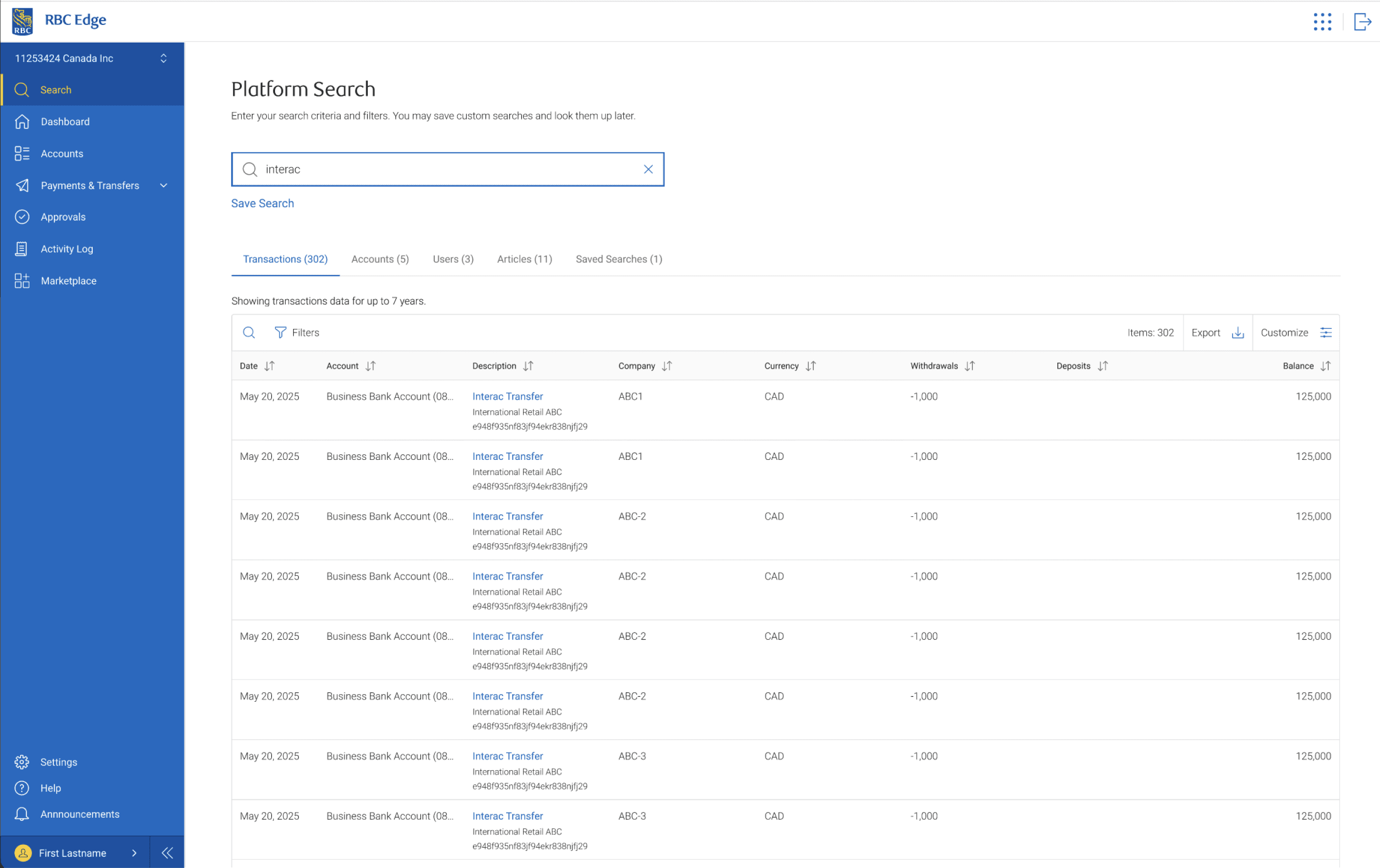
1.0 Search → 2.0 Search results in page
Selecting the search entry point opens a dedicated full-page results view. Results are organized into categorized tabs, allowing users to scan across content types in a structured, familiar layout.
Path B
Pop-up Window
1.0 Search → 1.1 Pop-up window → 2.0 Search results in page
Search results appear in a floating overlay while typing, with categories listed in a sidebar. Clicking into a result expands to a full page view, keeping users anchored to their original context while they explore.
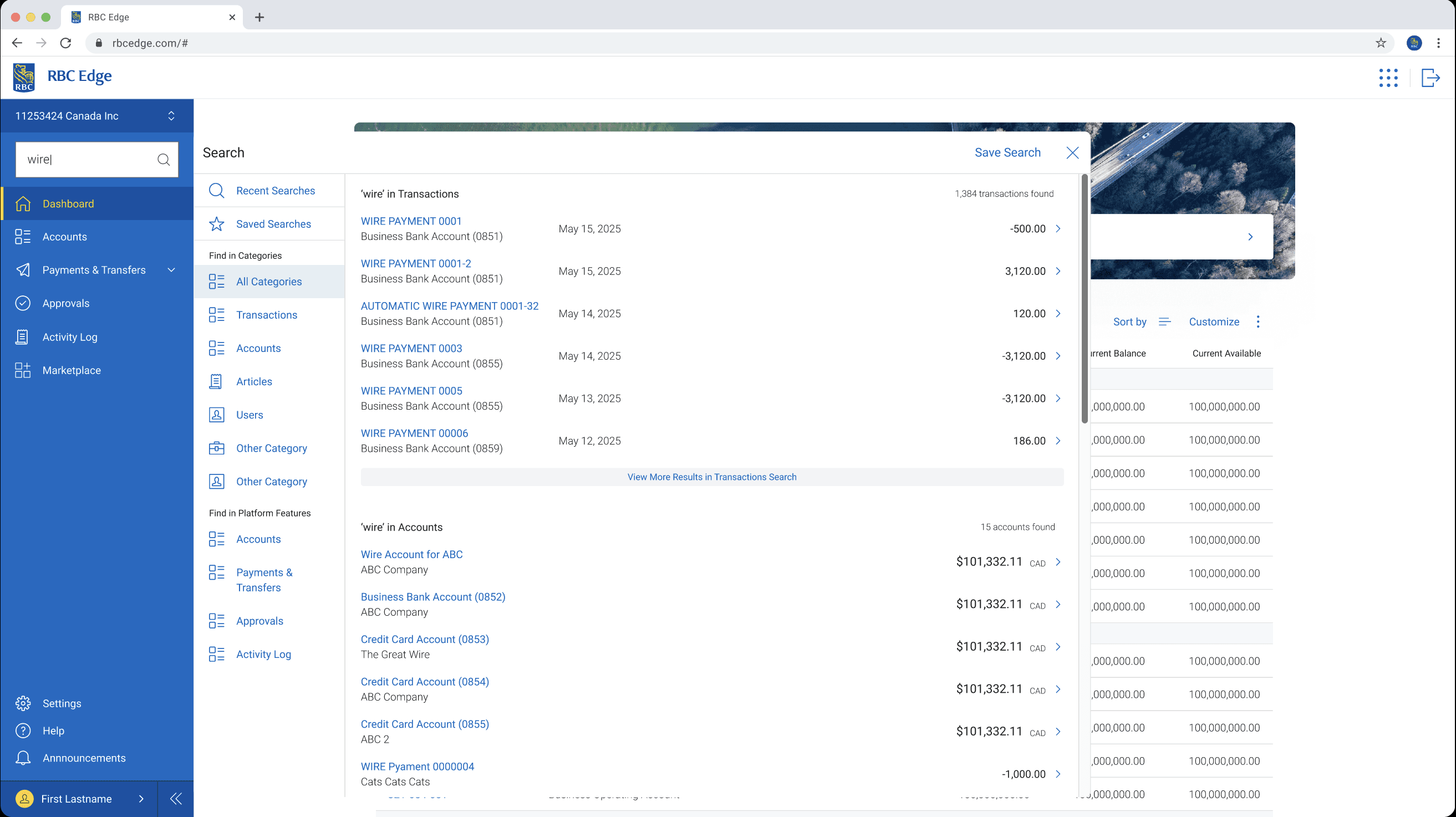
Both paths represented a significant departure from the existing experience — the key question wasn't which was "better" in the abstract, but which interaction model better matched how business clients actually search.
insights
Mixed Results, Clear Signal
Three things became clear through synthesis:
“We also want to be able to search across multiple bank accounts [he meant across entities] which is a feature that works ok in the legacy platform, but not so much in the new platform.”
Insight 1
The team's assumption was partially right — but incomplete.
Users primarily search transactions. But that doesn't mean transaction search is working well. Many of the pain points surfaced were about the mismatched user mental model and missing features that users have already learned from the legacy platform.
Insight 2
Unified search has value — but for the right reasons.
Users didn't ask for global search. What they responded to was the relief of not needing to pre-decide where to look. Unified search solves an orientation problem, not just a scope problem.
“Where I feel is lacking is I can't really search for a word, so like a description. If I see something on the bank statement, I can't really search by that to find it.”
Where can I search for the report?
Reports are generated by "searching" in the legacy platform. However, in the new platform, they are the "search results" by transaction search and users can "print" it to perform the task.
Insight 3
Mismatching user mental model:
Search vs. Report
Some participants distinguished between transaction search and reporting based on task type, urgency, and formality—though others saw overlap between the two.
recommendations
Mixed Results, Clear Signal
Three things became clear through synthesis:
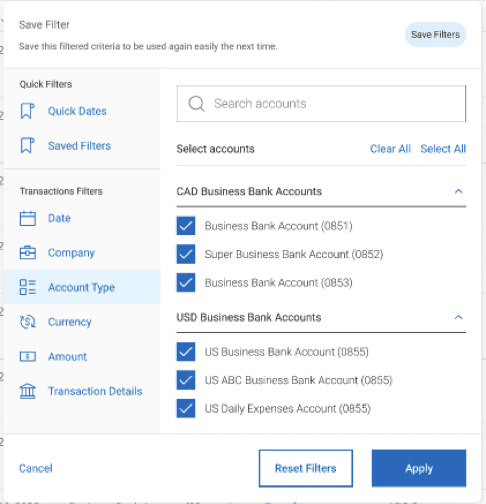
Recommended action 1
Deprioritize platform-wide search, enhance transaction search with:
Multi-entity search
Keyword- and description-based search
Unified search across posted and pending transactions
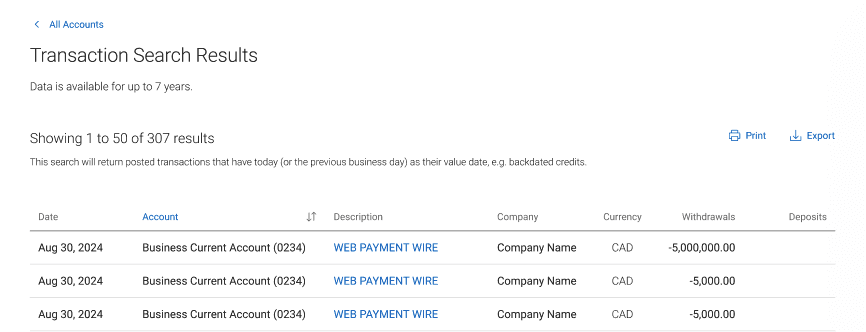
Recommended action 2
Add the capability to facilitate actions to support reconciliation and more formal tasks such as
Custom and scheduled report generation
Customizable search result views
limitations
What This Study Couldn't Answer
What we could evaluate
Clients' mental models for search
Day-to-day search needs and pain points
Reactions to two proposed prototype concepts
What we could not determine
The ideal information architecture for filters and sorting
Broader platform-wide organizational models
Long-term expectations across different business segments
One additional constraint worth noting: all participants were drawn from the same client panel, which may have introduced familiarity bias — prior exposure to [Company] products could have shaped how participants responded to the prototypes.
reflection
Retrospective
Takeaways
This project pushed me in two directions at once. As a researcher, it was my first time owning sessions end-to-end — from shaping the questions to running the room independently. As a designer, it reinforced something I believe deeply: the most useful research doesn't just answer the question you were asked. It reframes what the real question was.
We went in to test an assumption. We came out with a clearer picture of a user base in transition, and a stronger case for what kind of investment would actually serve them.
The work that matters next isn't just deciding whether to build unified search. It's making sure the foundation — transaction search, the thing clients use every single day — is solid enough to build on.

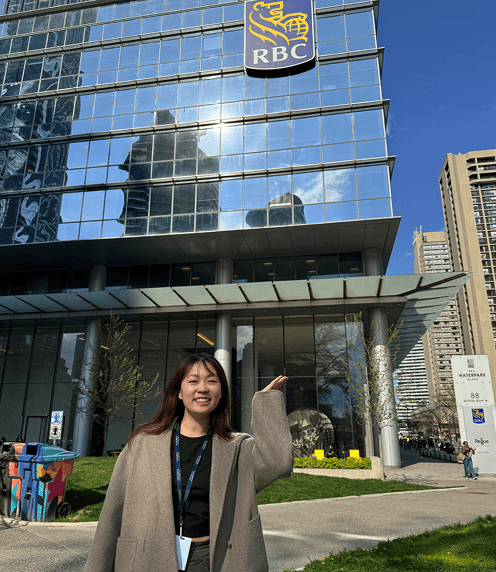

Met some really great people and spent my summer around the waterfront.
✦
View another case study where I did research at RBC